

Attic Mold Removal in Rochester, NH
Rochester's humid New England climate and seasonal moisture patterns create conditions where attic spaces become particularly vulnerable to mold growth, especially in homes where ventilation has deteriorated or insulation traps excess dampness. Attic mold removal addresses this problem at its source, eliminating active growth and restoring air quality in the spaces above your living areas. Kimball Mold Remediation connects you with local providers who can inspect, contain, and remove attic mold safely, helping protect your home's structural integrity and indoor environment.
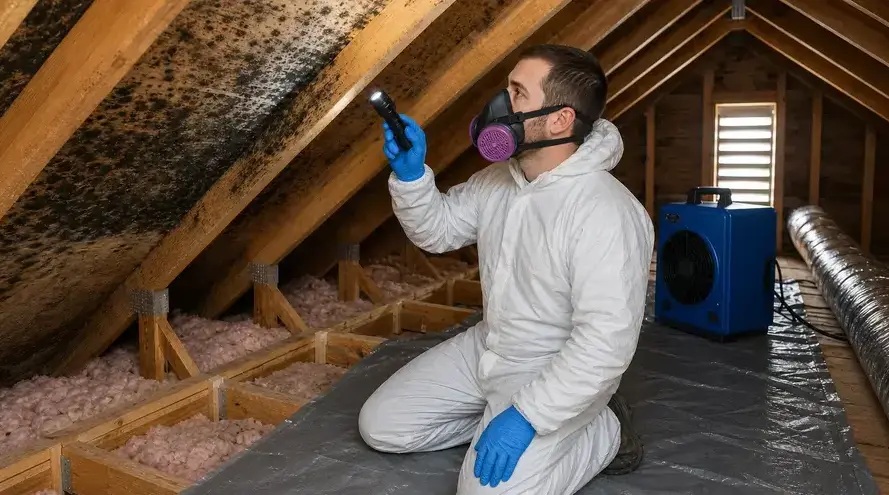
What gets cleaned in an attic, and what comes out
Two questions decide the scope of any mold job: what is it growing on, and how much of it is there. The EPA publishes an answer for both, and this is that guidance applied to the materials you would expect in an attic.
| Material | Under 10 sq ftabout a cabinet door, or one ceiling tile | 10 to 100 sq ftroughly one wall, or a small bathroom | Over 100 sq ftmore than one room's worth of surface |
|---|---|---|---|
| Wood surfacesroof sheathing, rafters and trussesEPA, Table 2 | Wet vacuumDamp wipeHEPA vacuum | Wet vacuumDamp wipeHEPA vacuum | Wet vacuumDamp wipeHEPA vacuumRemove and discard |
| Wallboardthe ceiling drywall below, seen from aboveEPA, Table 2 | HEPA vacuum | HEPA vacuumRemove and discard | HEPA vacuumRemove and discard |
What those methods mean, in EPA's words
- Wet vacuum
Wet vacuums are vacuum cleaners designed to collect water. They can be used to remove water from floors, carpets and hard surfaces where water has accumulated.
EPA, cleanup methods- Damp wipe
Mold can generally be removed from nonporous (hard) surfaces by wiping or scrubbing with water, or water and detergent.
EPA, cleanup methods- HEPA vacuum
HEPA (High-Efficiency Particulate Air) vacuums are recommended for final cleanup of remediation areas after materials have been thoroughly dried and contaminated materials removed.
EPA, cleanup methods- Remove and discard
Building materials and furnishings that are contaminated with mold growth and are not salvageable should be double-bagged using 6-mil polyethylene sheeting.
EPA, cleanup methods
Removed and replaced, whatever the area
- Fiberglass or other insulation — batt or blown insulation across the attic floor.
Fiber glass, or any other insulation material that is wet or visibly moldy (or if an unacceptable odor is present) should be removed and replaced by a qualified heating and cooling system contractor.
EPA, air duct cleaningEPA states this in its heating-and-cooling guidance and it is quoted here as written. Its water-damage table reaches the same conclusion for both fiberglass and cellulose insulation. - Insulated air ducts — insulated HVAC ducts run through the roof space.
If you have insulated air ducts and the insulation gets wet or moldy it cannot be effectively cleaned and should be removed and replaced.
EPA, air duct cleaningThe affected runs are what get replaced — not necessarily the whole system.
These guidelines are for damage caused by clean water. If you know or suspect that the water source is contaminated with sewage, or chemical or biological pollutants, then Personal Protective Equipment and containment are required by OSHA.
EPA, Table 1Porous materials that are wet and have mold growing on them may have to be discarded.
EPA, cleanup methodsMold can grow on wood, drywall, carpet and furniture if they remain wet for more than 24 hours.
EPA, flood cleanup
Attic mold is usually a ventilation fault rather than a leak — most often a bathroom fan discharging into the attic, or soffit vents blocked by insulation. The sheathing and rafters are wood, so they can often be cleaned and kept. The insulation underneath them cannot, and nor can any insulated duct running through the space.
Rochester spends about 144.9 nights a year at or below freezing, most of them in January. Cold surfaces are condensing surfaces, and an unheated space stays cold long after the air outside has warmed.Source: NOAA 1991-2020 Climate Normals, ROCHESTER SKYHAVEN AP, NH US station (3.3 mi from Rochester)
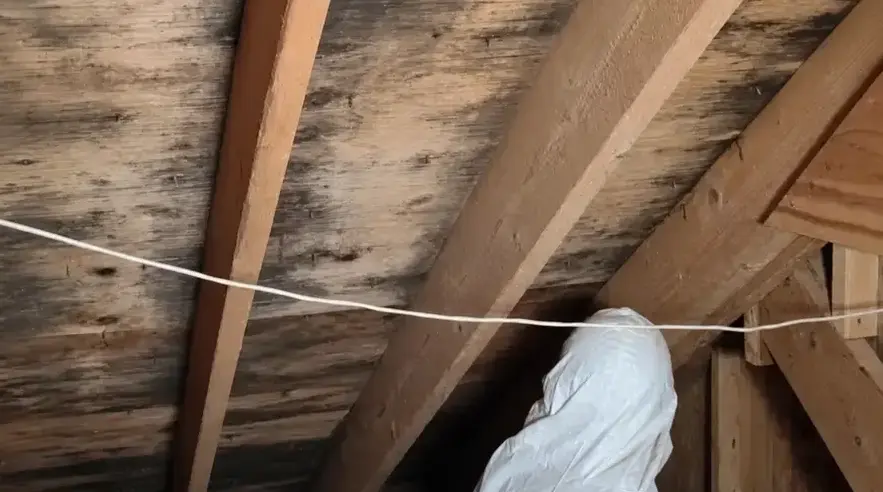
Attic Mold Removal in Rochester, NH: Why It Matters
Rochester's position in the humid New England Seacoast climate means properties here face persistent moisture challenges year-round. Summer brings consistently high humidity, while fall and spring deliver damp, raw conditions that create ideal environments for mold growth in spaces like attics—areas where air circulation is often limited and moisture can accumulate undetected. Older homes throughout Rochester commonly feature basements, while many newer properties and outlying areas rely on crawl spaces; both foundation types are vulnerable to trapped moisture that eventually migrates upward into attic zones. When attic mold takes hold, it can affect indoor air quality, compromise structural wood, and create conditions that worsen over time if left unaddressed.
Kimball Mold Remediation connects Rochester property owners with local independent providers who specialize in attic mold removal, approaching each situation with thorough inspection, safe containment, and complete removal tailored to the space. The process goes beyond surface cleanup—providers assess moisture sources, ventilation issues, and underlying conditions that allowed mold to develop, then implement solutions designed to prevent recurrence. Whether the concern is active growth or early-stage detection, working with a local professional gives you both peace of mind and a clear path forward for protecting your home's air quality and structural integrity.
Why Rochester Homeowners Trust Kimball for Attic Mold Removal
Fast Local Attic Mold Removal
Kimball connects Rochester property owners with independent local providers who respond quickly to attic mold concerns. Prompt assessment and removal prevent mold from spreading deeper into your home's structure and air quality.
Thorough Attic Mold Removal Process
Independent providers in the Kimball network use containment and removal methods designed to address attic mold safely and completely. Clear communication throughout the process keeps you informed every step of the way.
Experienced Attic Mold Removal Providers
Kimball's local providers bring deep experience in identifying and removing attic mold in Rochester homes. They understand how moisture accumulates in attic spaces and tailor removal to your home's specific needs.
Attic Mold Removal for High-Humidity Seasons
Rochester's humid summers and damp spring and fall seasons create ideal conditions for mold growth in attics where ventilation is poor. Local providers connected through Kimball recognize these seasonal moisture patterns and help protect your attic before mold takes hold.
How Our Attic Mold Removal Process Works
Schedule Your Attic Mold Removal Visit
Contact Kimball Mold Remediation to describe any signs of attic mold—musty odors, visible growth, or water stains on wood framing. We connect you with a local Rochester provider who schedules a convenient time to inspect your attic space.
Get Your Attic Assessed & Diagnosed
The local provider examines your attic for mold growth, moisture sources, and ventilation gaps. In Rochester's humid climate, attics are especially vulnerable to trapped moisture year-round, making a thorough inspection critical to identify the full extent of attic mold and its causes.
Begin Attic Mold Removal & Prevention
Once assessment is complete, the provider outlines a removal plan tailored to your attic's condition. The local professional handles containment, attic mold removal, and drying to protect your indoor air quality, then recommends ventilation or moisture-control improvements to reduce recurrence.
Dealing with Attic Mold Removal in Rochester? Get fast, professional help.
Call Now — (603) 207-1275Attic Mold Removal Across Rochester, NH
Rochester's position in the New England Seacoast region brings persistent humidity and moisture challenges throughout much of the year. Summer heat combines with high ambient moisture, while fall and spring bring damp conditions that create ideal environments for mold growth in enclosed spaces like attics. Older homes throughout Rochester—particularly in established neighborhoods like Pickering and Downtown Rochester—often feature aging roof structures and ventilation systems that may struggle to manage moisture movement into attic spaces. Newer construction in outlying areas can also develop attic moisture problems when ventilation is inadequate or when minor roof leaks go undetected.
Attic mold growth often develops silently because many homeowners rarely inspect these spaces. The combination of seasonal dampness, poor air circulation, and roof vulnerabilities common to older New England homes means attic mold removal in Rochester requires prompt attention to prevent structural damage and indoor air quality issues. When you notice signs of mold—visible growth, musty odors, or discoloration on framing and sheathing—connecting with a local remediation provider quickly helps address the root cause and restore a healthier home environment.
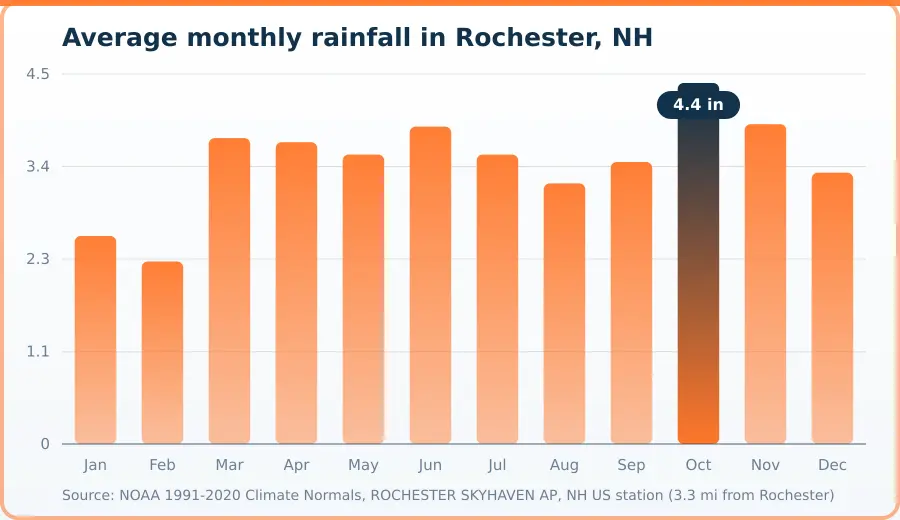
| Period | Monthly rainfall (in) |
|---|---|
| Jan | 2.5 |
| Feb | 2.2 |
| Mar | 3.7 |
| Apr | 3.7 |
| May | 3.5 |
| Jun | 3.9 |
| Jul | 3.5 |
| Aug | 3.2 |
| Sep | 3.4 |
| Oct | 4.4 |
| Nov | 3.9 |
| Dec | 3.3 |
Source: NOAA 1991-2020 Climate Normals, ROCHESTER SKYHAVEN AP, NH US station (3.3 mi from Rochester). Retrieved October 5, 2026.
Seasonal Attic Mold Removal in Rochester, NH
Spring: Thaw and Moisture
Spring snowmelt and increased rainfall can drive moisture into attics through roof leaks and poor ventilation, creating ideal conditions for mold growth. Kimball Mold Remediation connects Rochester property owners with local providers who inspect attics early in the season to catch developing mold before it spreads.
Summer: Heat and Humidity
High humidity levels throughout summer cause moisture to accumulate in attic spaces, especially in older homes with basements or newer properties with crawl spaces where ventilation may be inadequate. Local providers reached through Kimball Mold Remediation assess attic ventilation and moisture control to prevent mold establishment during the warmest months.
Fall: Damp Conditions Return
Raw, damp fall weather brings persistent moisture to attic spaces just as weather patterns shift. Attic mold often becomes visible or detectable during this season as moisture lingers without summer heat to dry it out. Kimball Mold Remediation helps property owners arrange inspections before winter arrives.
Winter: Cold and Condensation
Temperature swings between heated indoor spaces and cold exterior air create condensation in attics, depositing moisture directly on framing and insulation. Mold growth accelerates in these damp, unheated spaces during winter months. Independent local providers through Kimball Mold Remediation address condensation sources and removal to protect attic structures through the season.
Related Services
Attic Mold Removal FAQs — Rochester, NH
Attic mold removal typically begins with inspection to identify affected areas and moisture sources. The independent local provider will contain the work area to prevent spore spread, remove contaminated insulation and materials, clean surfaces, and address underlying moisture issues. Proper ventilation and drying follow to restore safe indoor air quality. The exact scope depends on mold extent and your attic's construction.
Kimball Mold Remediation works to connect you with a local independent provider promptly so you can address attic mold without unnecessary delay. Response times vary by provider availability, but our goal is to help you reach someone who can assess your situation and discuss next steps as soon as possible.
Attic mold removal pricing depends on several factors: the extent of mold growth, amount of affected insulation and materials requiring removal, accessibility of your attic space, whether ventilation or moisture-control improvements are needed, and local labor rates. The independent provider you're connected with will assess your specific situation and discuss costs during the inspection phase.
Before attic mold removal, ensure the contractor has safe access to your attic and clear pathways if needed. Seal off the attic from living spaces where possible to minimize disturbance to household air during work. Follow any specific preparation instructions the provider gives you. Stay out of the attic during removal work to avoid exposure to disturbed mold.
After removal, maintain proper attic ventilation to reduce moisture buildup—inadequate airflow is a common cause of attic mold recurrence. Ensure soffit and ridge vents are clear, seal air leaks from living spaces below, and address any roof leaks promptly. Regular inspections help catch early signs of moisture before mold develops again.
New England's climate brings sustained high humidity and damp conditions across spring, summer, and fall months, creating ideal conditions for mold growth in poorly ventilated attics. Attics with inadequate air circulation trap moisture year-round, making them especially vulnerable during these seasons. Addressing ventilation and moisture control helps protect your attic year-round.
Homeowner Safety Toolkit
Verify Your Rochester, NH Mold Remediation Company
Before you hire anyone, use these independent national resources to confirm credentials, standards, and track record.
IICRC
Publishes the S520 standard for professional mold remediation. Confirm a company's technicians hold real, current IICRC certification before you hire them.
Verify CertificationBBB
Look up any mold remediation company's complaint history, customer reviews, and accreditation status — a free, independent check before you hire.
Check StandingCDC
Covers the health effects of mold exposure and safe cleanup practices, separate from the remediation work itself — useful if anyone in the home has respiratory symptoms.
Mold Health GuideDealing with Attic Mold Removal in Rochester, NH? Call (603) 207-1275 for 24/7 help.
Call Now — (603) 207-1275Areas We Serve in Rochester, New Hampshire
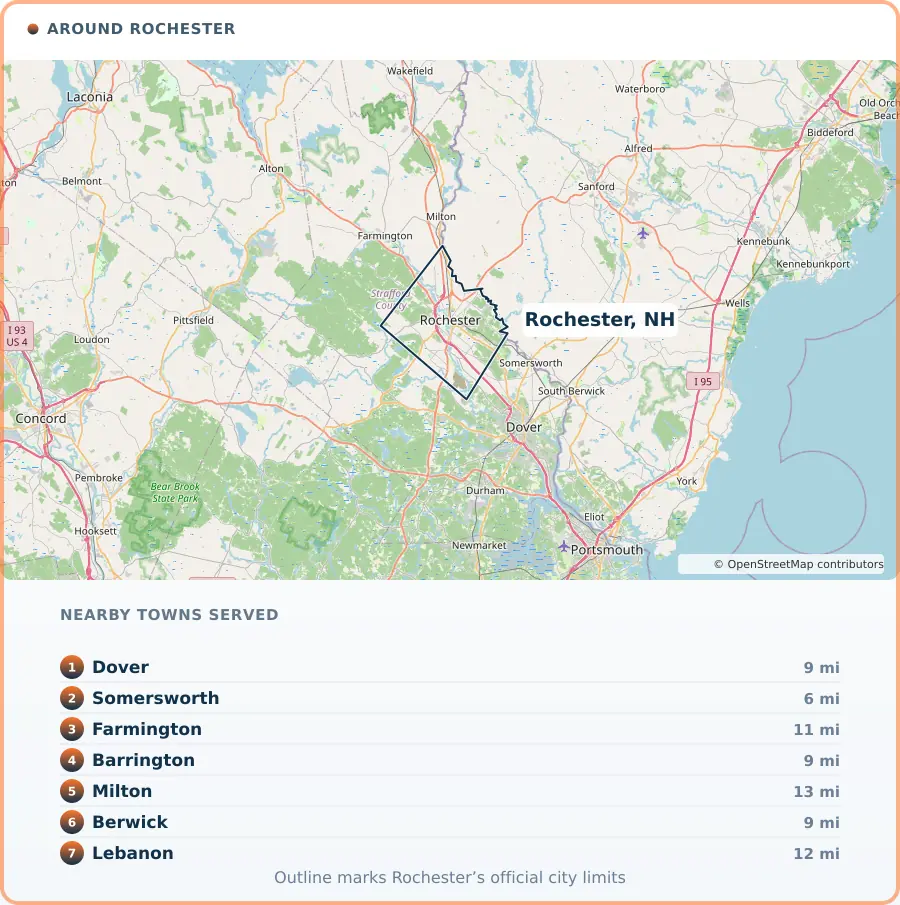
Serving Rochester, NH and 7 communities around it. Local knowledge of how each area is built shapes how the work is handled there.
Rochester, NH Information
Rochester, NH carries its mill-town roots forward into something broader today — a working city of roughly 33,000 anchored by Frisbie Memorial Hospital and aerospace-materials manufacturer Albany International. Healthcare, manufacturing, and education sit alongside a steady retail and service base, with businesses lining corridors like Route 11 and Milton Road to serve both the city and the wider Strafford County area.
Its spot within the Seacoast New Hampshire labor market keeps Rochester tied to Dover and Portsmouth, with commuters moving easily between them. Neighborhoods from Gonic to Downtown Rochester each carry their own pace and character, giving the city a lived-in, layered feel rather than a single downtown identity — a practical, unpretentious place shaped by generations of work and community.

Photo: Billy Hathorn, CC BY-SA 3.0