

Mold Inspection in Rochester, NH
Rochester's position in New England's humid seacoast climate creates persistent moisture conditions year-round, with particularly damp seasons in spring and fall that can lead to trapped moisture in both older basements and newer crawl spaces. Mold inspection identifies where moisture is accumulating and what conditions are allowing growth to take hold, so remediation efforts address the actual problem rather than surface symptoms. Early detection through professional inspection protects your property's integrity and the indoor air quality your household depends on.
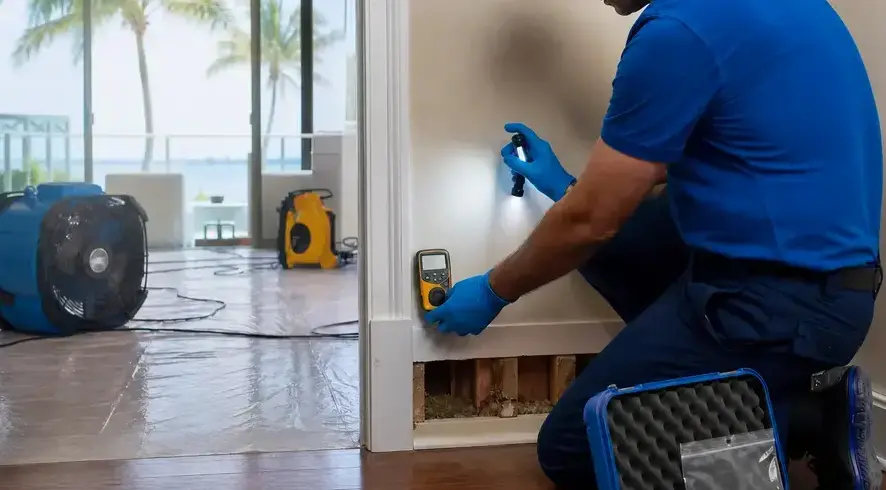
What does a mold inspection look for in Rochester, NH?
Before paying for sampling it is worth knowing what a result can and cannot establish. EPA publishes an answer, quoted here as written.
Surface sampling may be useful to determine if an area has been adequately cleaned or remediated.EPA
Sampling for mold should be conducted by professionals who have specific experience in designing mold sampling protocols, sampling methods and interpreting results.EPA
So sampling earns its place at the two ends of a job — confirming what is there when it is hidden, and confirming it has gone once the work is done. EPA is equally clear that it is not always needed: in most cases, if visible mold growth is present, sampling is unnecessary, and there is no federal number a result can be measured against.
In most cases, if visible mold growth is present, sampling is unnecessary.EPA
Standards or Threshold Limit Values (TLVs) for airborne concentrations of mold, or mold spores, have not been set.EPA
Strafford County has recorded flood events in 12 separate years, most recently in 2022 — history worth knowing before deciding how far to look.Source: NOAA Storm Events Database, Strafford County (1996-2026; Flood, Flash Flood and Coastal Flood events)

Mold Inspection Services for Rochester, NH Homes
Rochester's location in New England's humid Seacoast climate creates persistent moisture challenges year-round. Summer brings consistently high humidity, while fall and spring introduce damp, raw conditions that encourage moisture accumulation indoors. These seasonal patterns, combined with the region's natural rainfall, make moisture control a serious concern for property owners. Whether your home is in areas like Downtown Rochester, East Rochester, or the Ten Rod Road area, trapped moisture in basements and crawl spaces—common features in both older and newer Rochester properties—can lead to hidden mold growth if ventilation and drainage aren't working properly. Mold inspection is not simply a reactive step after visible signs appear; it's a proactive measure that identifies moisture and early mold problems before they spread or affect indoor air quality.
Kimball Mold Remediation connects Rochester property owners with independent local providers who conduct thorough mold inspections tailored to your home's specific layout and moisture history. A comprehensive inspection goes beyond surface checks, identifying moisture sources, vulnerable areas, and any mold colonies that may be developing in concealed spaces. Once the inspection is complete, the findings guide a clear remediation plan—addressing both the mold itself and the moisture conditions that allowed it to grow in the first place. By starting with a detailed inspection, you gain the information needed to protect your property and the people living in it.
Why Rochester Property Owners Choose Kimball Mold Inspection
Thorough Mold Inspection Process
Mold inspection identifies hidden growth in walls, crawl spaces, and attics before it spreads. The providers Kimball connects you to use systematic assessment to locate moisture sources and document findings clearly for your records and next steps.
Fast Local Mold Inspection Response
Mold inspection delays allow growth to worsen and spread. Kimball connects Rochester property owners with local inspection providers who schedule quickly and arrive ready to assess your home or building without unnecessary waiting.
Clear Mold Inspection Reporting
Mold inspection results mean nothing without clarity. The providers Kimball connects to you explain findings in plain language, show you affected areas, and outline what remediation steps the inspection recommends for your specific situation.
Mold Inspection for Year-Round Moisture Risk
Rochester's damp spring and fall seasons, combined with summer humidity, create persistent moisture conditions in homes and buildings. Mold inspection helps identify where trapped dampness is promoting growth, so remediation can address the root cause—not just visible mold.
How Our Mold Inspection Process Works
Schedule Your Mold Inspection
Contact Kimball Mold Remediation to arrange a mold inspection appointment with a local provider in Rochester, NH. We'll connect you with an independent inspector who can visit your property to assess for mold growth and identify moisture sources.
Get a Detailed Mold Inspection Report
The inspector will examine your home's vulnerable areas—basements and crawl spaces are common moisture collection points in Rochester's humid New England climate—and document findings with recommendations for containment and removal based on what's found.
Proceed with Mold Remediation
Once inspection results are clear, Kimball connects you with a local remediation provider to safely remove mold and address the moisture conditions that allowed it to develop, restoring your indoor air quality.
Dealing with Mold Inspection in Rochester? Get fast, professional help.
Call Now — (603) 207-1275Mold Inspection Across Rochester Neighborhoods
Rochester's position in New England's humid seacoast climate creates year-round moisture challenges that make mold inspection essential for property owners. The region experiences consistently elevated humidity through the warmer months and damp conditions during fall and spring transitions—periods when indoor moisture can accumulate rapidly if ventilation and drainage are inadequate. These seasonal patterns affect homes across all Rochester neighborhoods, from established areas like Pickering and Downtown Rochester to newer developments throughout the region, making regular mold inspection a practical step for protecting indoor air quality.
Foundation type plays a significant role in how moisture behaves in Rochester properties. Older homes in the area commonly feature basements, which require careful attention to water intrusion and condensation control, while many newer and outlying homes rely on crawl spaces—both foundation styles are susceptible to trapped moisture and mold growth without proper ventilation and moisture management. A thorough mold inspection accounts for these structural differences and the specific moisture pathways they create, ensuring that inspection providers can identify risk areas before they develop into larger indoor air quality concerns.
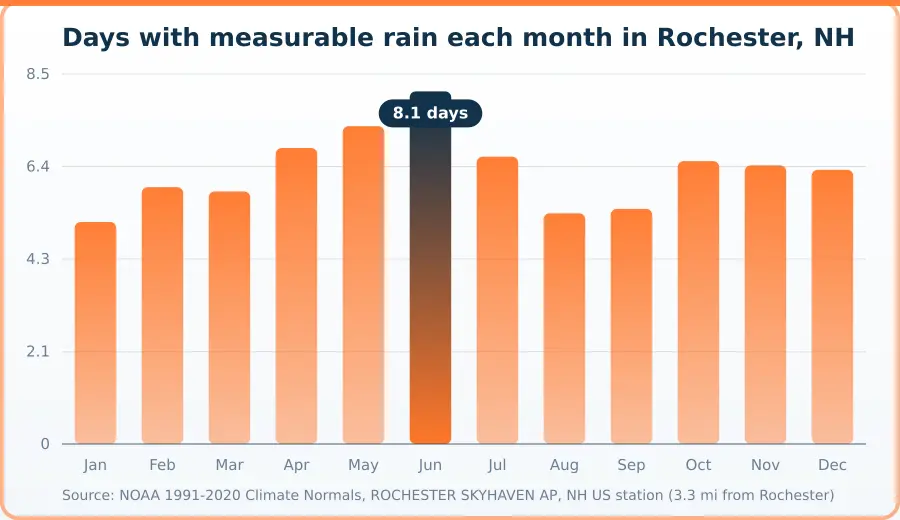
| Period | Days with measurable rain by month (days) |
|---|---|
| Jan | 5.1 |
| Feb | 5.9 |
| Mar | 5.8 |
| Apr | 6.8 |
| May | 7.3 |
| Jun | 8.1 |
| Jul | 6.6 |
| Aug | 5.3 |
| Sep | 5.4 |
| Oct | 6.5 |
| Nov | 6.4 |
| Dec | 6.3 |
Source: NOAA 1991-2020 Climate Normals, ROCHESTER SKYHAVEN AP, NH US station (3.3 mi from Rochester). Retrieved October 5, 2026.
Seasonal Mold Inspection Needs in Rochester, NH
Spring: Thaw and Moisture
As snow melts and spring rains arrive, indoor moisture levels rise sharply. Mold inspection becomes critical to identify growth in basements, crawl spaces, and around foundation areas where winter dampness has accumulated. Kimball connects Rochester property owners with local inspectors who detect early mold activity before it spreads.
Summer: High Humidity Peaks
Summer's elevated humidity creates ideal conditions for active mold growth throughout homes and businesses. Mold inspection during these months reveals colonies thriving in poorly ventilated spaces, HVAC systems, and around air conditioning condensation lines. Local providers accessible through Kimball help identify and address mold before late-season moisture becomes trapped indoors.
Fall: Damp Season Returns
Fall's raw, damp conditions and seasonal rainfall drive moisture deep into older homes with basements and newer properties with crawl spaces alike—both foundation types vulnerable to trapped moisture and mold growth without proper air circulation. Mold inspection now helps property owners in areas like Gonic and East Rochester catch colonization early, preventing winter containment of moisture and mold inside walls and foundations.
Winter: Cold and Condensation
Winter's temperature swings between outdoor cold and heated indoor air create significant condensation on windows, pipes, and wall cavities. Mold inspection reveals dormant or slow-growing colonies in these condensation-prone zones. Kimball's local network helps Rochester homeowners address winter moisture problems before spring thaw reactivates mold and spreads spores throughout living spaces.
Related Services
Mold Inspection FAQs — Rochester, NH
A mold inspection involves a thorough visual examination of your property, including attics, basements, crawl spaces, and areas prone to moisture. The inspector looks for visible mold growth, water damage, and moisture problems. They may use moisture meters or thermal imaging to detect hidden dampness. Air and surface samples are often collected to identify mold types and spore levels, which helps determine whether remediation is needed and what approach is best.
Kimball Mold Remediation works to connect you with a local independent mold inspection provider in Rochester quickly. Response times vary by provider availability, but the goal is to get your property assessed without unnecessary delays. Contact us to learn how soon an inspector can visit your home or business and begin the inspection process.
Mold inspection pricing depends on your property's size, the scope of inspection needed, and whether sampling and lab analysis are included. Homes with basements or crawl spaces may require more extensive inspection due to moisture-prone areas. Providers Kimball connects you with can explain their pricing structure during initial contact, helping you understand what's included before the inspection begins.
Before your inspection, ensure the inspector can access all areas, including basements, attics, and crawl spaces. Clear clutter or stored items blocking moisture-prone zones if safe to do so. Document any visible water stains, musty odors, or areas of concern you've noticed. You don't need to clean extensively—the inspector needs to see conditions as they are to give an accurate assessment.
Yes. The inspection report identifies moisture sources and problem areas, showing you exactly where mold thrives and why. Addressing ventilation, drainage, or humidity issues the inspector identifies helps reduce conditions that allow mold to return. This information is valuable for long-term property maintenance and preventing recurrence after remediation is complete.
New England's climate creates moisture challenges year-round. High humidity through summer and damp conditions in fall and spring increase mold risk, making inspection valuable whenever you notice moisture signs. However, inspection is important anytime you spot water damage, smell mustiness, or suspect mold—seasonal timing should not delay addressing potential problems in your home.
Homeowner Safety Toolkit
Verify Your Rochester, NH Mold Remediation Company
Before you hire anyone, use these independent national resources to confirm credentials, standards, and track record.
IICRC
Publishes the S520 standard for professional mold remediation. Confirm a company's technicians hold real, current IICRC certification before you hire them.
Verify CertificationBBB
Look up any mold remediation company's complaint history, customer reviews, and accreditation status — a free, independent check before you hire.
Check StandingCDC
Covers the health effects of mold exposure and safe cleanup practices, separate from the remediation work itself — useful if anyone in the home has respiratory symptoms.
Mold Health GuideDealing with Mold Inspection in Rochester, NH? Call (603) 207-1275 for 24/7 help.
Call Now — (603) 207-1275Areas We Serve in Rochester, New Hampshire
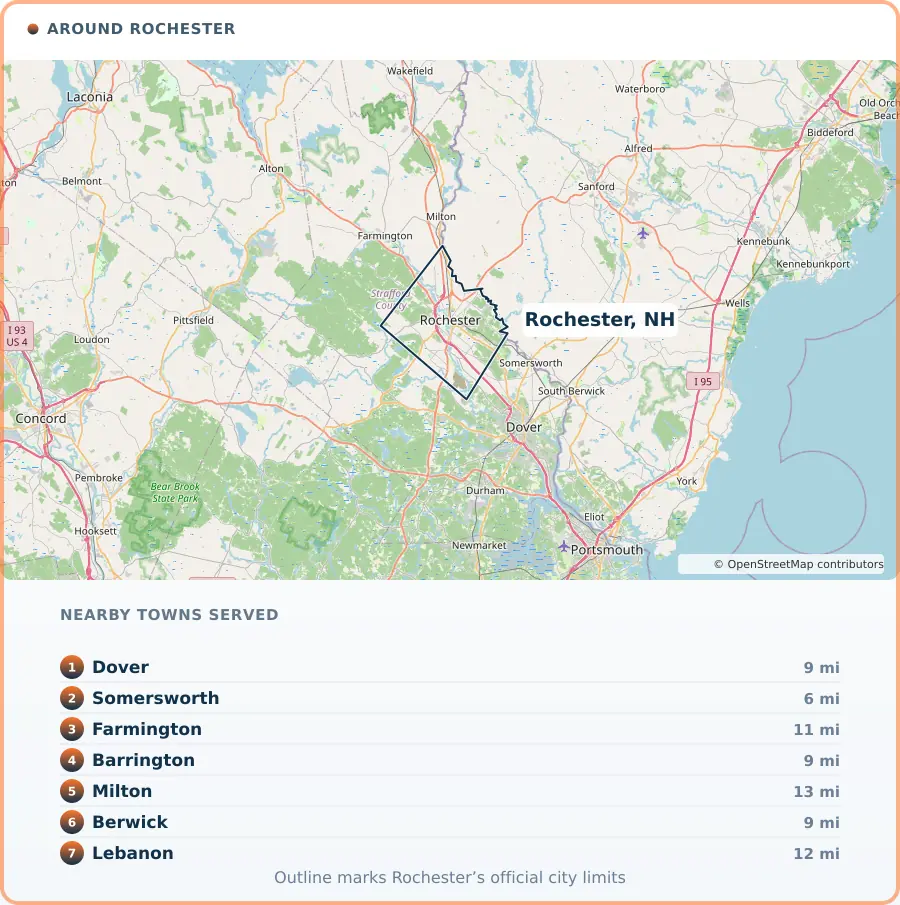
Serving Rochester, NH and 7 communities around it. Local knowledge of how each area is built shapes how the work is handled there.
Rochester, NH Information
Rochester, NH carries its mill-town roots forward into something broader today — a working city of roughly 33,000 anchored by Frisbie Memorial Hospital and aerospace-materials manufacturer Albany International. Healthcare, manufacturing, and education sit alongside a steady retail and service base, with businesses lining corridors like Route 11 and Milton Road to serve both the city and the wider Strafford County area.
Its spot within the Seacoast New Hampshire labor market keeps Rochester tied to Dover and Portsmouth, with commuters moving easily between them. Neighborhoods from Gonic to Downtown Rochester each carry their own pace and character, giving the city a lived-in, layered feel rather than a single downtown identity — a practical, unpretentious place shaped by generations of work and community.
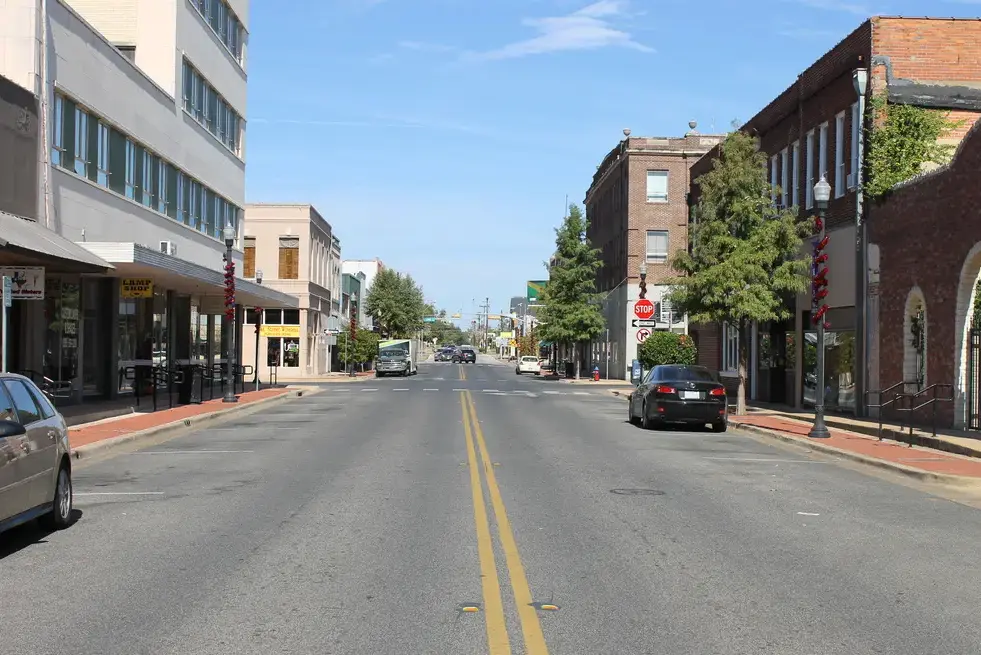
Photo: Billy Hathorn, CC BY-SA 3.0